
On November 5th 2015, two dams of an iron mining reservoir collapsed in Marina, federal state of Minas Gerais, Brazil. Subsequently, a mudslide burst out into Rio Doce, killing at least a dozen people and causing severe damage to nearby villages. The toxic components of the mining wastewaters are likely to harm the ecosystems along Rio Doce. Two weeks after the incident, the polluted waters reached the Brazilian Atlantic Ocean coast.
Using its proprietary, sensor-independent water quality processors, EOMAP was able to track the propagation of the mudslide in Rio Doce on its 650 km journey to the ocean. The arrival of the plume at the estuary was observed in near real time using daily MODIS data – at 500m resolution. The satellite-retrieved turbidity measures provided a good indication on the dynamic impact of the dam collapse.
Higher resolution products, from 30 to 2 m horizontal resolution, are available upon request.

Fig.: Example of 30 m horizontal resolution product (Landsat 7/8, data ©USGS, processing ©EOMAP)
References:
Further reading:
Latest EOMAP News

Reuters bases Mekong article on EOMAP data

Oman Oil Spill: SDB Mapping of Critical Shallow Waters for Safe Salvage

eoapp DIVE unterstützt die Tauchplanung

UKHO’s highest-ranked Satellite-Derived Bathymetry provider

Mapping the ‘unmappable’ Great Barrier Reef

Dredge plume monitoring using satellite-based turbidity mapping
Related Posts

08 / 2026
eoapp DIVE unterstützt die Tauchplanung
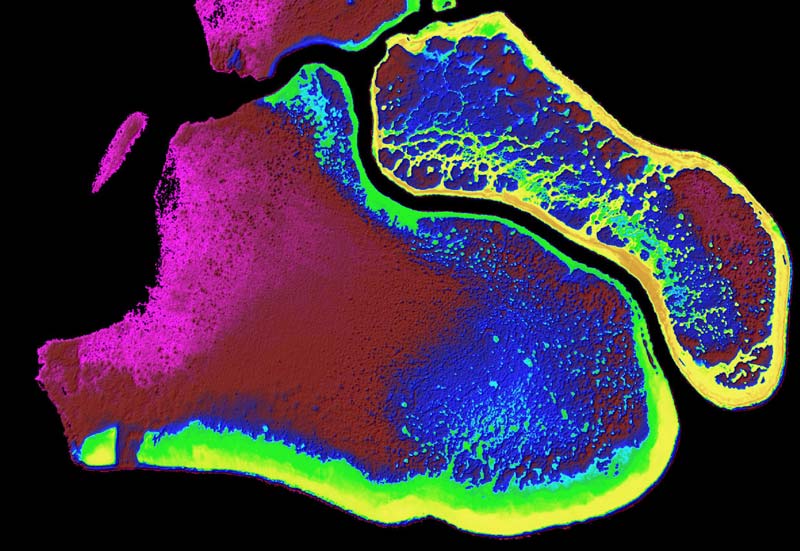
06 / 2026
Mapping the ‘unmappable’ Great Barrier Reef
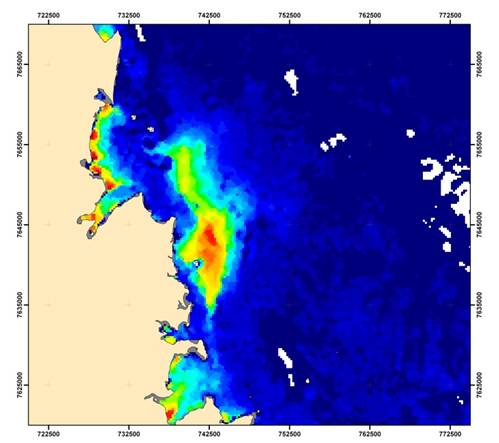
06 / 2026
Dredge plume monitoring using satellite-based turbidity mapping
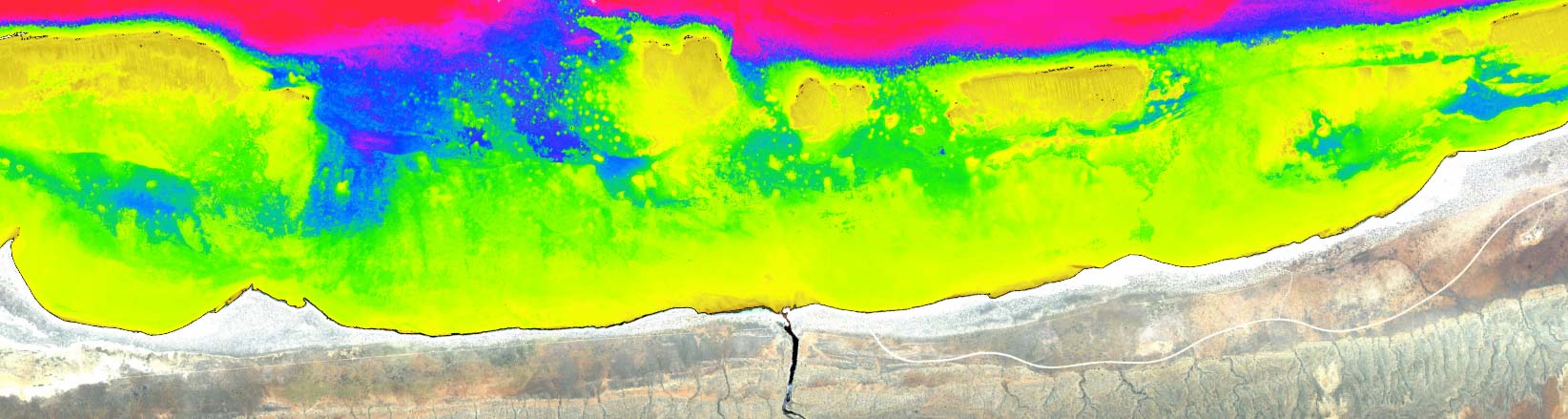
04 / 2026
Ningaloo Reef 2009: Hyperspectral Marine Habitat Mapping
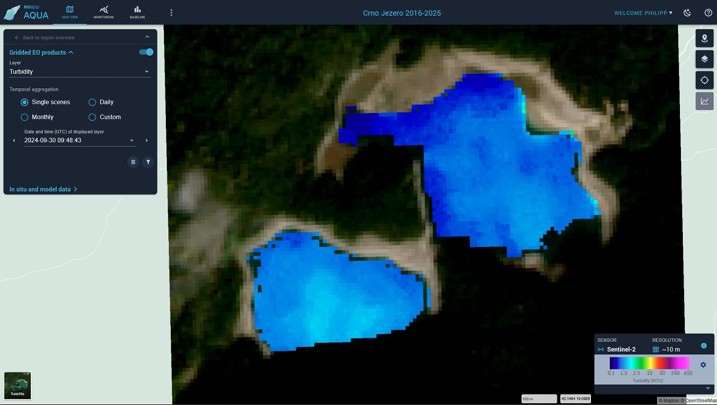
04 / 2026
Advocating for Healthy Mountain Ecosystems
04 / 2026
Environmental monitoring for sporting events
04 / 2026
20 Years EOMAP: Advancing Earth Observation

03 / 2026
New BD & Sales Manager for the Americas
03 / 2026
Quick Facts: Lake Eyre

02 / 2026