The Zambezi River counts among Africa’s most important river basins. This ESA-funded project is centered on nature-based solutions to address climate change threats. For this endeavour, we contribute through water quality and Earth Observation (EO)-based discharge data. This will be integrated into the data established platform of the Zambezi River Basin Commission (ZAMCOM).
The Zambezi River links 8 countries
The Zambezi River is the fourth longest in Africa, has a basin of approximately 1,370,000 km2, and runs through eight countries: Angola, Botswana, Malawi, Mozambique, Namibia, Tanzania, Zimbabwe, and Zambia. Like most rivers, it provides a wide range of ecosystem services, including drinking water, sanitation, transportation, electricity generation, and habitats for diverse species. These entail an ongoing contested development. In addition, resource extraction, industrial and population growth along its catchment put pressure on the Zambezi.
Bridging data gaps
ZAMCOM’s mission relies heavily on high-quality data. The ZAMWIS system, their comprehensive online data repository, combines everything from historical hydrological records to real-time satellite data. However, continuous data flow from all member states has been a challenge, leading to critical information gaps. That’s where external support comes in, for example, through independent data sources.
Satellite tech to complement in-situ data
Through the ESA-funded GDA Water Resources project, EOMAP provided independent data, helping ZAMCOM generate consistent river discharge measurements. By using advanced satellite technology — combining altimetry sensors for water levels and optical sensors for river width and flow characteristics — EOMAP delivered daily discharge estimates at seven critical locations. Impressively, this EO-based approach exceeded ZAMCOM’s expectations, offering vital insights for strategic management of the Zambezi and its tributaries, including areas influencing the enormous Cahora Bassa reservoir.
Water Quality Monitoring: A Game-Changer for River Ecosystems
ZAMCOM’s data previously lacked coverage on water quality — a critical component of river ecosystem management. Thanks to satellite-derived insights from EOMAP, that has changed. For instance, the Kafue Flats, a crucial wetland in Zambia with industrial, ecological, and economic importance, can now be monitored at over ten locations. This allows for early detection of environmental issues that would be hard to track with conventional fieldwork.
In another key discovery, Chlorophyll-a concentrations highlighted two Upper Zambezi tributaries, Kapombo and Lungwebungu, as hotspots for elevated levels. While the reasons behind these spikes require further investigation, the findings have sparked ZAMCOM’s interest in continuing this line of research.
Driving Sustainable Water Use
The Zambezi Watercourse Commission (ZAMCOM) is a collaborative effort between eight nations: Angola, Botswana, Malawi, Mozambique, Namibia, Tanzania, Zambia, and Zimbabwe. The intergovernmental organization aims to promote equitable and efficient management of the Zambezi River’s water resources. This involves balancing upstream water extraction with the needs of downstream communities. By this, ZAMCOM strives to foster sustainable development and reduce poverty.
The project has been conducted with support from GDA Water Resources by ESA and the Climate Investment Fund (CIF).
- Discover the project on GDA’s interactive “Impact Sphere”.
Let’s connect
Contact our R&I team for more details.
Learn more about satellite-based Water Quality monitoring
Images

Short & Sweet
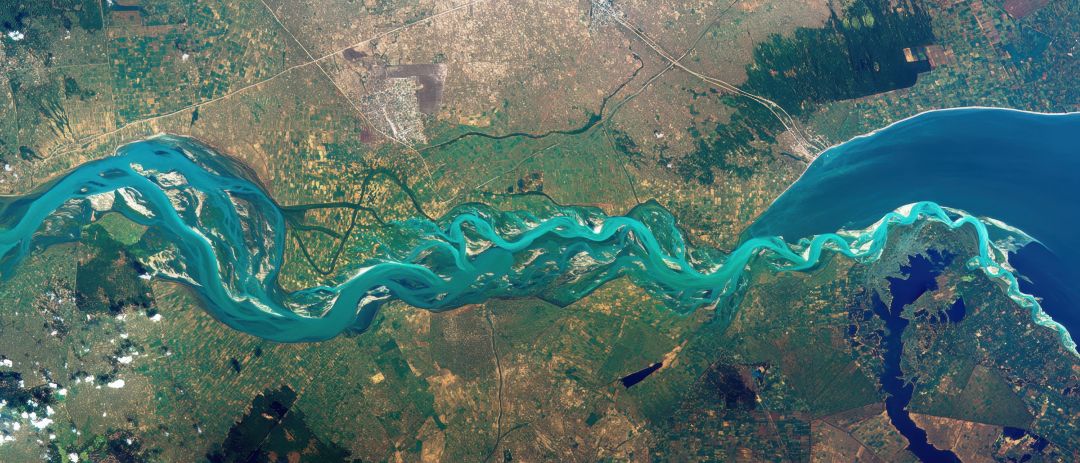
We conducted space-based measurements of discharge and water quality along the Zambezi River. Through this data, the river managers gain key insights for strategic measures along the Zambezi and its tributaries. Our work supports the protection of highly vulnerable ecosystems and their services for the local communities.
Place & Time
Zambia, Africa
2025
Clients & Partners
GDA Water Resources, ESA, Zambezi Watercourse Mission (ZAMCOM)
Related Use Cases
Advice4COASTS
Kelp monitoring in Los Angeles ports
Snowpower
REMAP – a new workflow for drone mapping
Impact factors of oxygen loss on Elbe River
COASTS – Coastal resilience and blue carbon
4S project – SDB mapping worldwide
Catch-Mekong
EMODnet
Water Quality for Lactec Brazil