
Cyanobacteria in bathing waters can affect the health of humans and animals. On 12th August 2025, “Tagesschau”, Germany’s public TV news channel, reported about these blue-green algae in a lake and how this impacts tourism. – What can we do about it?
Driven by climate change, algal blooms are on the rise
Water quality is essential for summer tourism. While many people enjoy swimming in inland and coastal waters when it is warm and sunny, these conditions also attract an unwelcome guest: harmful algal blooms (HABs).
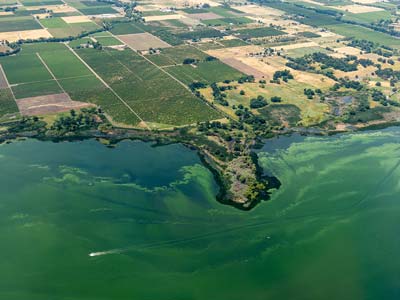
Cyanobacteria, also known as blue-green algae, are microscopic organisms that are naturally present in all types of water. In warm, nutrient-rich environments, they can multiply quickly, creating blooms that spread across the water’s surface.
In the TV report of Tagesschau, an authority representative reports of +4°C rise in water temperature over only 4 decades in Altmühlsee in Southern Germany. Moreover, he expects cyanobacteria to increase due to climate change.
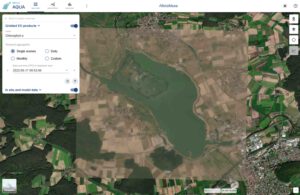
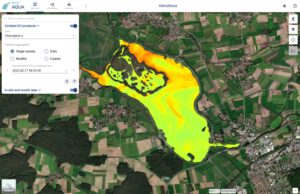
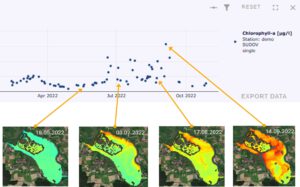
Satellite technology enables timely action
In order to prevent harm to humans and animals, it is essential to predict algal blooms in advance and regularly monitor the effectiveness of management measures. To this end, authorities can rely on satellite-based insights for support:
- Satellites cover wide areas and can provide daily updates, thus revealing changes in water quality over time and across large bodies of water.
- While satellites excel in providing large-scale, frequent data, in situ measurements offer high resolution at specific points.
- This complementary approach helps to gain a more complete understanding of water quality conditions and implement appropriate measures in good time.
EOMAP is already cooperating with several German environmental agencies to support a visualisation
and early warning system for water bodies – for example through eoapp AQUA.
Relevant Earth Observation solutions
In this context, tourism and water-related authorities can build on these solutions by EOMAP:
Eoapp AQUA
… helps authorities anticipate upcoming algae blooms. They can combine their in-situ measurements with our satellite-based measurements and set thresholds for various parameters, including HAB, and react accordingly. For example, they can respond to changes in freshwater inflow, or, as seen on TV, close down bathing sites to avoid health issues.
Water quality measurements
… include an assessment of water clarity, as well as other parameters. The Harmful Algal Bloom (HAB) indicator is one of them. It serves as a proxy for cyanobacteria. We calculate the HAB value using optical satellite data. Water quality measurements also include an assessment of water level, chlorophyll levels and turbidity, the latter serving as indicators of inflows, for example from agriculture or water treatment plants.
The BLUERISM project
In this ESA-funded cooperation, we are designing a tool to detect macroplastics and mucilage, monitor water quality for diving and issue Sargassum alerts to enable proactive coastal management.
Further Reads
Süddeutsche Zeitung of 13th August 2025 reports about the algal blooms in Bavarian lakes and measures authorities take to mitigate them.
In 2022, the US based magazin Quartz interviewed our head of water quality, Karin Schenk on the topic and titled their article: ‘Satellites can spot toxic algae before it kills your dog’.
Learn more about satellite-based water management or try out the web app eoapp AQUA.
Let’s connect
Reach out to our water quality team. It will be our pleasure to support you.
Latest EOMAP News


Related Posts
03 / 2026
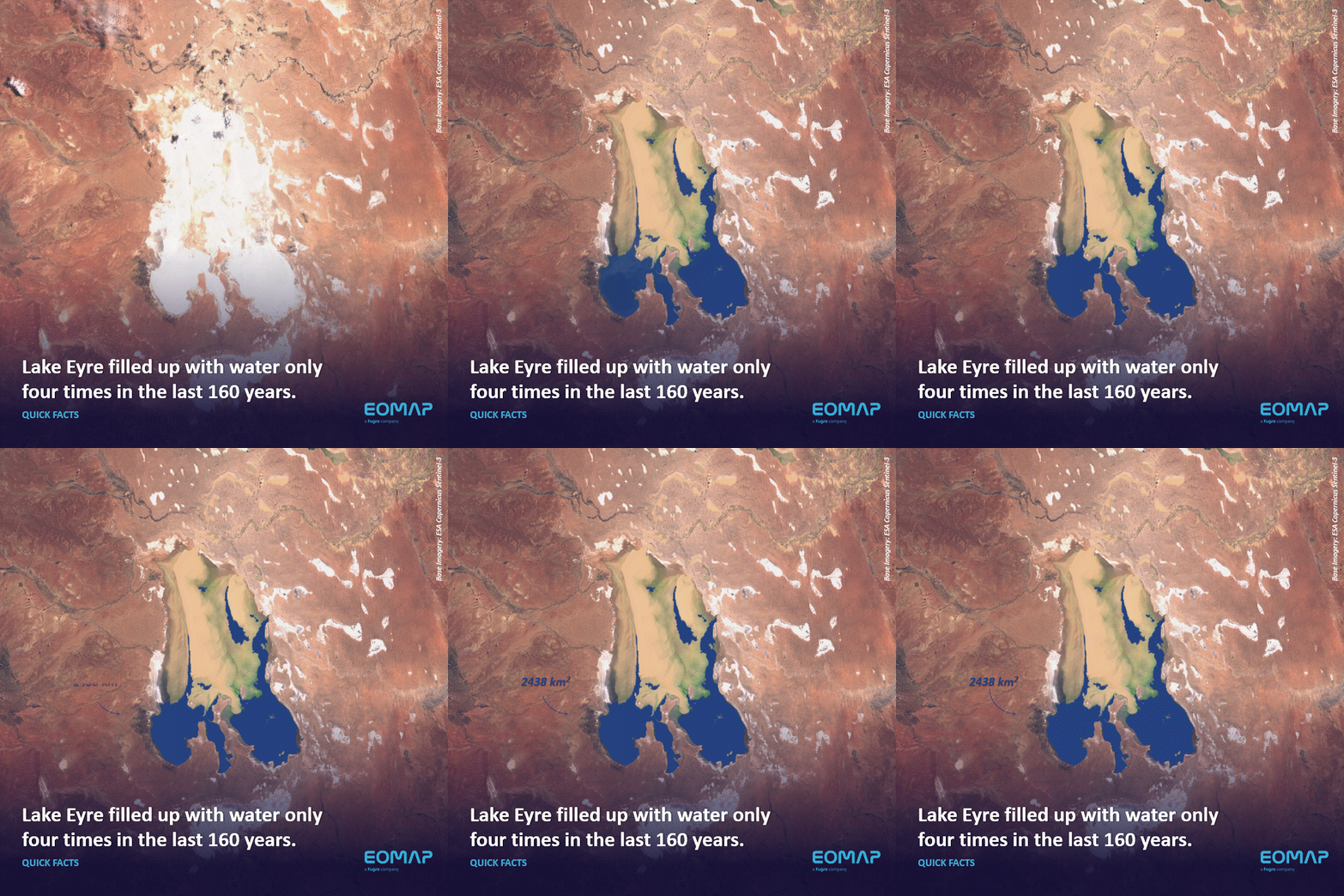
Quick Facts: Lake Eyre
02 / 2026
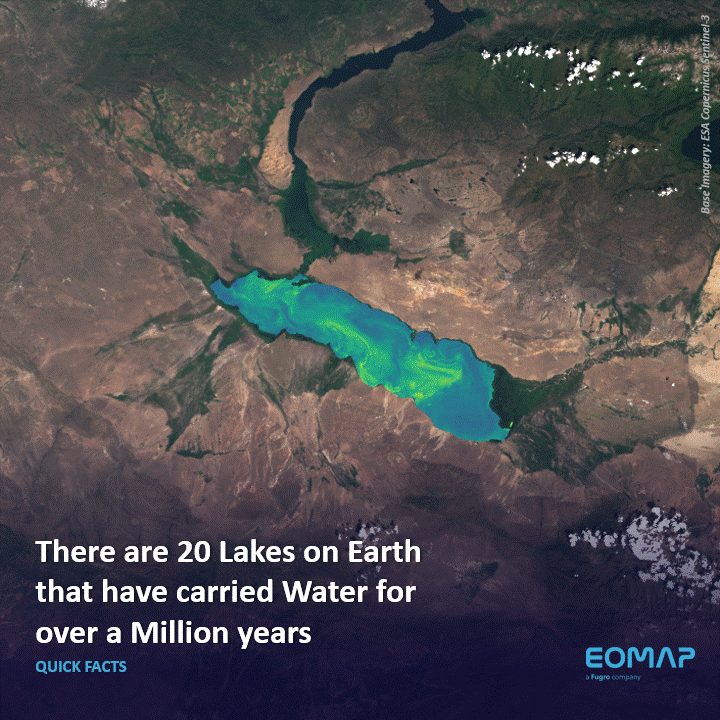
Quick Facts: Ancient Lakes
01 / 2026
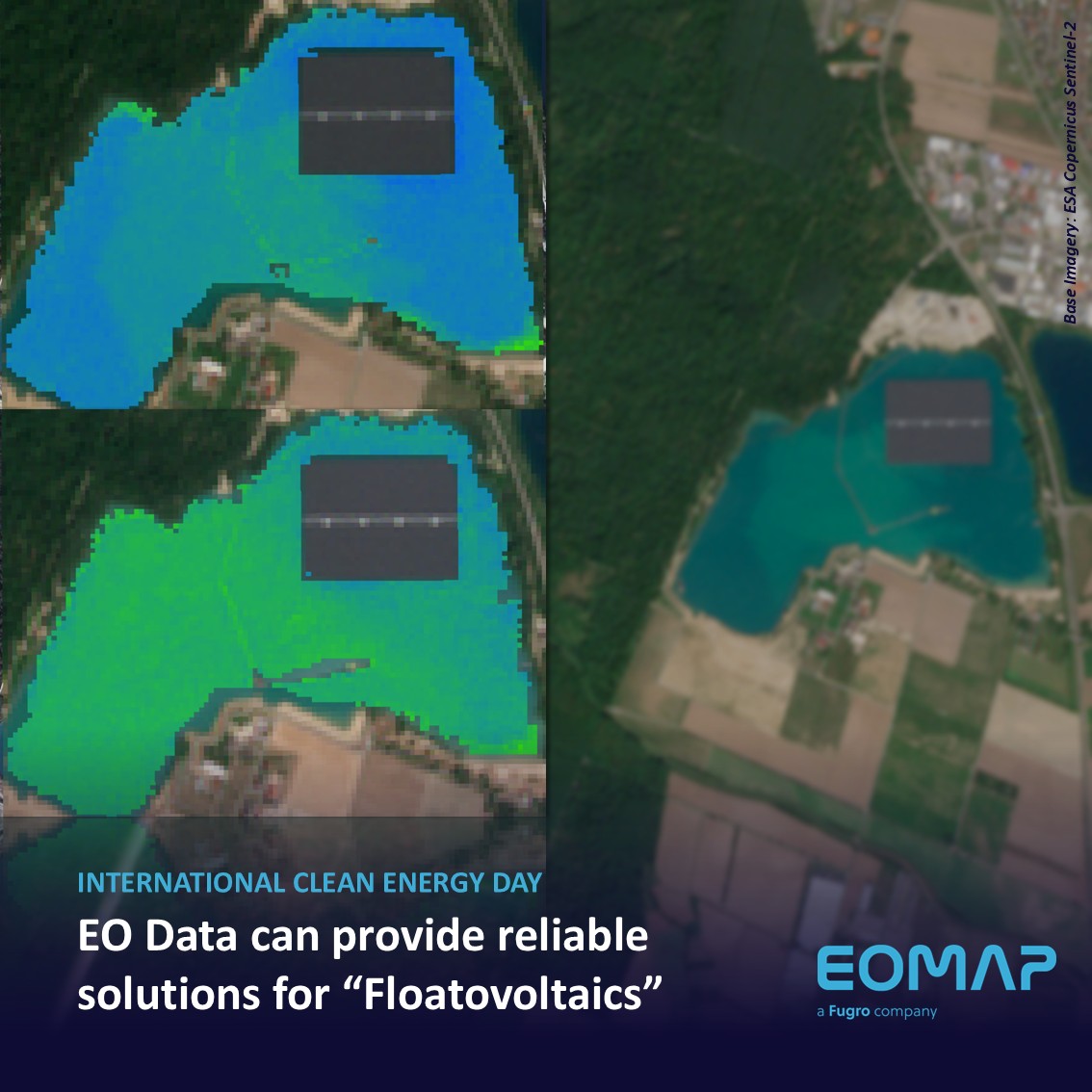
Space-based Intelligence for Clean Energy
01 / 2026
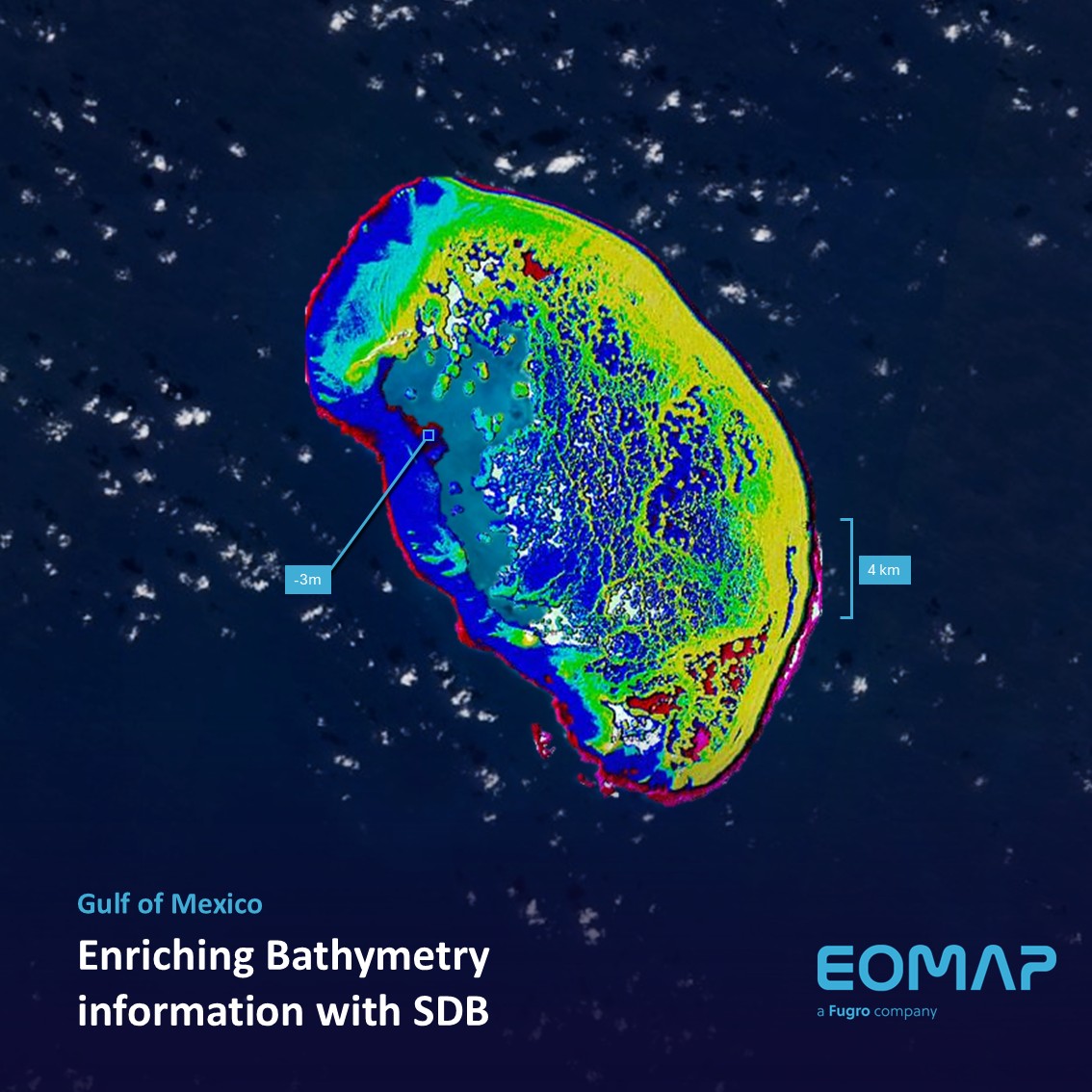
Bathymetry in the Gulf of Mexico

01 / 2026
Pro-active hydropower management in winter
12 / 2025
From Climate to Nature and Biodiversity: Insights on COP30
12 / 2025
Water Crisis in Iran – Lessons to be learned
11 / 2025
Italian Webinar: Water Quality Monitoring from Space

11 / 2025
Projektstart SEAGUARD
10 / 2025