
Welcome to our ‘Quick Facts’ series! In this new series, we are spotlighting remarkable places on our planet while deepening our understanding of aquatic ecosystems. This time, we’ll focus on ancient lakes.
Long-lived lakes are biodiversity hotspots
Ancient or long-lived lakes are classified as lakes sustaining water consistently for at least a million years. They are very rare on our planet.
Their sustained water presence creates isolated aquatic environments where unique species evolve. Therefore, ancient lakes are known to hotspots of biodiversity and endemism. Lake Ohrid in Southeast Europe, for instance, boasts over 200 endemic species of plants and animals.
Insights into long-term environmental change
Despite being rare, the combined freshwater volume of these ancient lakes is enormous. Lake Baikal, for example, carries 20% of the world’s unfrozen freshwater.
Having persisted for millions of years, these long-lived lakes are unique time capsules. In this role, they offer invaluable insights into long‑term environmental change and the resilience of aquatic life.
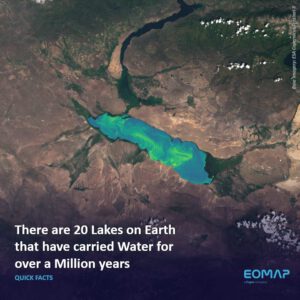
Lake Zaysan, Kazakhstan. At EOMAP, we retrieved the sum of organic absorption using European Space Agency – ESA Copernicus Sentinel-3 imagery.
Lake monitoring across the world
In many lake projects worldwide, we are delivering environmental intelligence. These include Lake Elsinore and Canyon Lake in the US, Lake Constance and the “land of 1,000 lakes” Mecklenburg-Vorpommern in Germany, or Lake Victoria in Africa.
With space-based insights on water quality, we support utilities, authorities, and industries in smarter risk management and sustainable decision‑making.
Let’s connect
Learn more about integrated water quality monitoring here.
For hands-on insights on your lake, please contact the water quality team.
Latest EOMAP News


Related Posts
03 / 2026
Quick Facts: Lake Eyre
01 / 2026
Space-based Intelligence for Clean Energy
01 / 2026
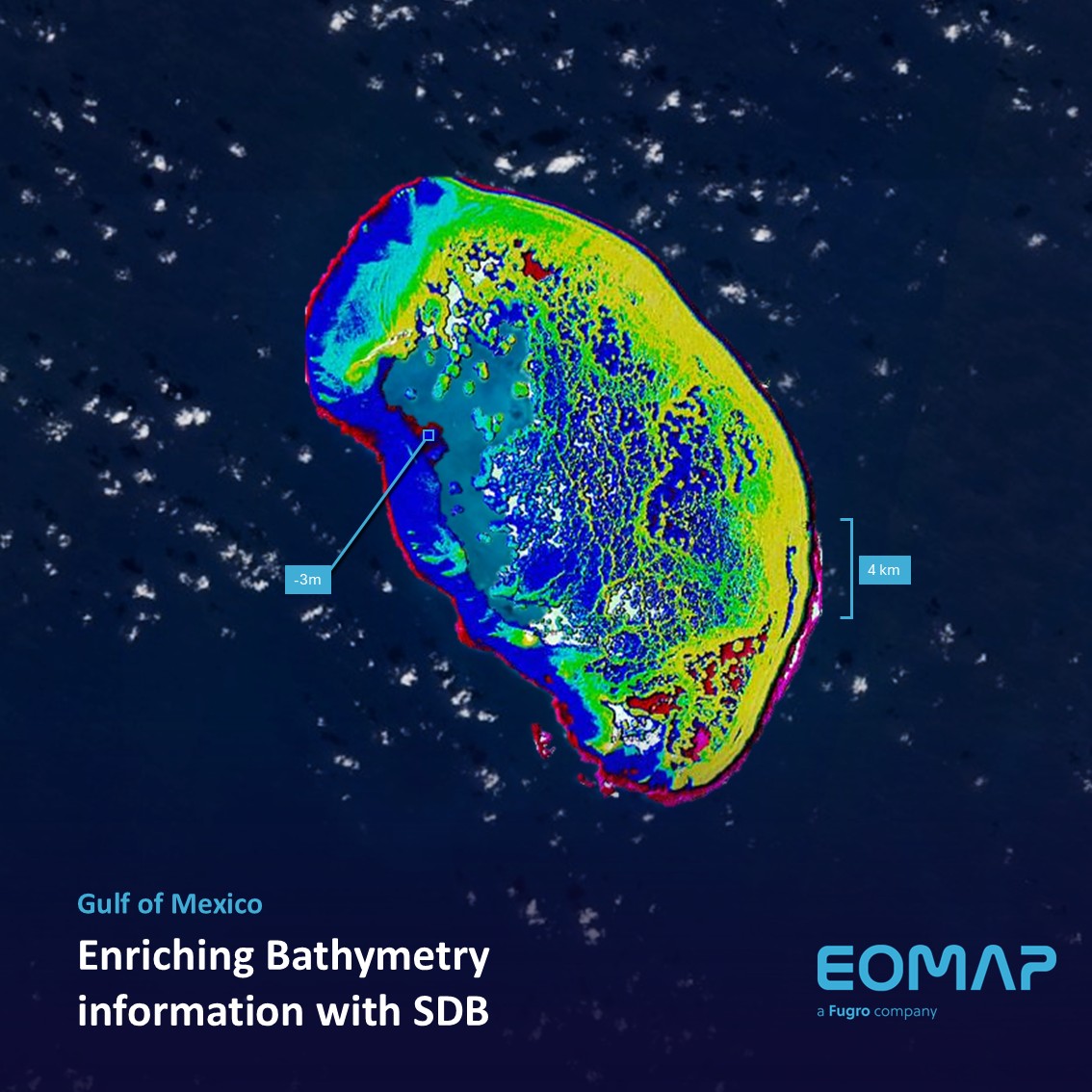
Bathymetry in the Gulf of Mexico
01 / 2026
Pro-active hydropower management in winter
12 / 2025
From Climate to Nature and Biodiversity: Insights on COP30
12 / 2025
Water Crisis in Iran – Lessons to be learned
11 / 2025
Italian Webinar: Water Quality Monitoring from Space

11 / 2025
Projektstart SEAGUARD
10 / 2025
New Storymap: Bathing Water Monitoring from Space
09 / 2025