
Milestone #4: Large-scale dredging monitoring using satellite-based turbidity mapping.
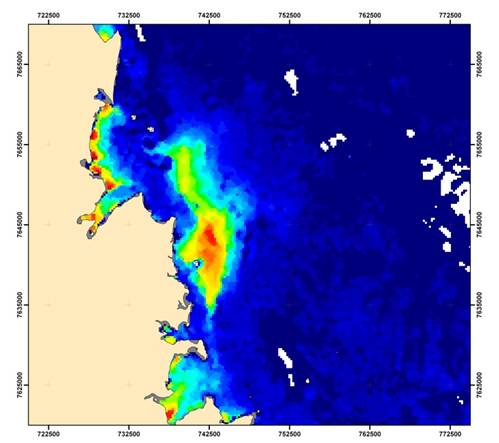
In 2007, Woodside energy required a reliable water quality monitoring approach to meet environmental regulations. The area in Northwest Australia covered around 1.000 square kilometers of coastal waters. EOMAP used physics-based algorithms to create turbidity maps from satellite data, delivering results on average every two days over more than two years.
The goal of the project was to establish a reliable, regular large-scale turbidity monitoring system for pipeline related dredging operations.
A key objective was to track and quantify dredge plumes consistently over time and monitor their proximity to environmental sensitive areas. Traditional methods, such as in situ, only provided point-based measurements. Airborne monitoring would have resulted in substantially increased costs.
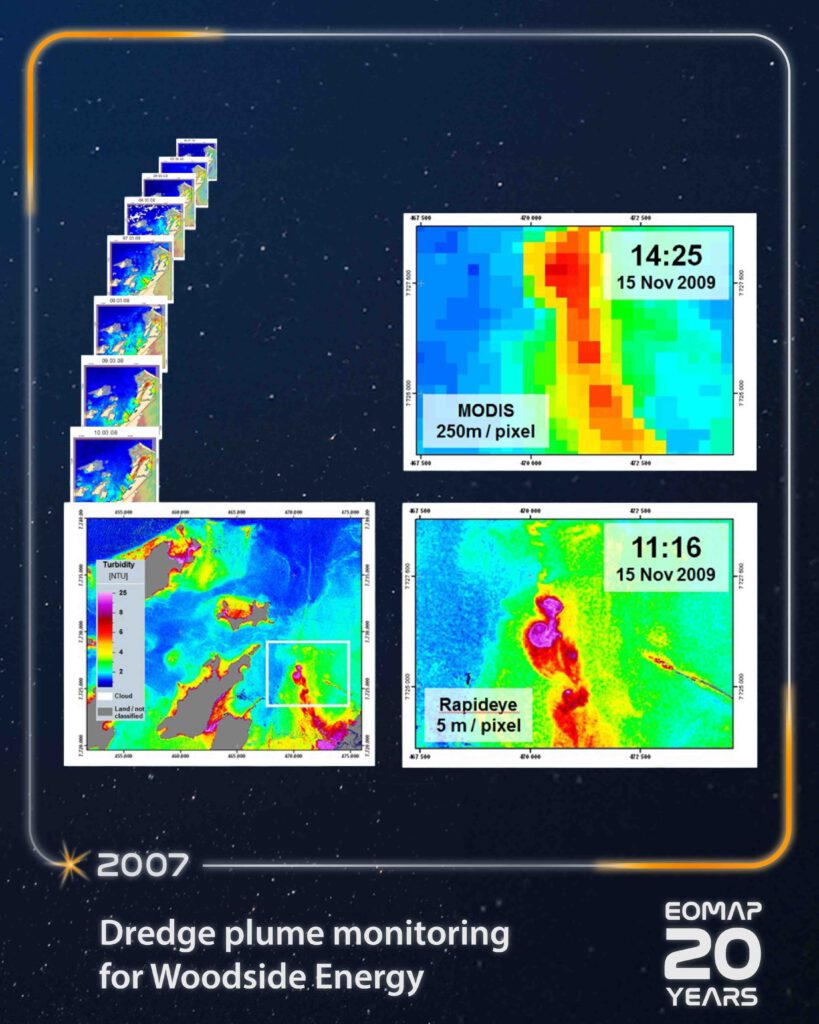 For the first time, this project demonstrated that satellite-based turbidity mapping can support large-scale dredging operations in the Oil & Gas industry.
- More than 430 satellite-derived water quality data sets were delivered. They covered an area of 1.000 square kilometers over a period of approximately two years.
- The main spatial resolution was delivered at 250 meters, but various other data sets with up to 3m spatial resolution were utilized for independent verification and monitoring of two records a day.
- Continuous mapping enabled accurate tracking of turbidity patterns to support environmental monitoring and decision-making at a high frequency interval.
“With the professional support from EOMAP and a fast-tracked delivery of daily satellite products the governmental monitoring obligations could be fulfilled and created a first in Australia for such operational use in the Oil & Gas industry.” says Dr. Peter Hausknecht, former chairman of the IOGP Earth Observation subcommittee and SME for remote sensing at Woodside Energy at the time.
With that, the project proved that large-scale, non-invasive monitoring can be both reliable and cost-effective.
Learn More
- Here are more details on “</yoastmark”>”</yoastmark”>”</yoastmark”>”</yoastmark”>”</yoastmark”>”</yoastmark”>”</yoastmark”>”</yoastmark”>”</yoastmark”>”</yoastmark”>”</yoastmark”>”</yoastmark”>”</yoastmark”>”</yoastmark”>”_blank” rel=”noopener”>this project.
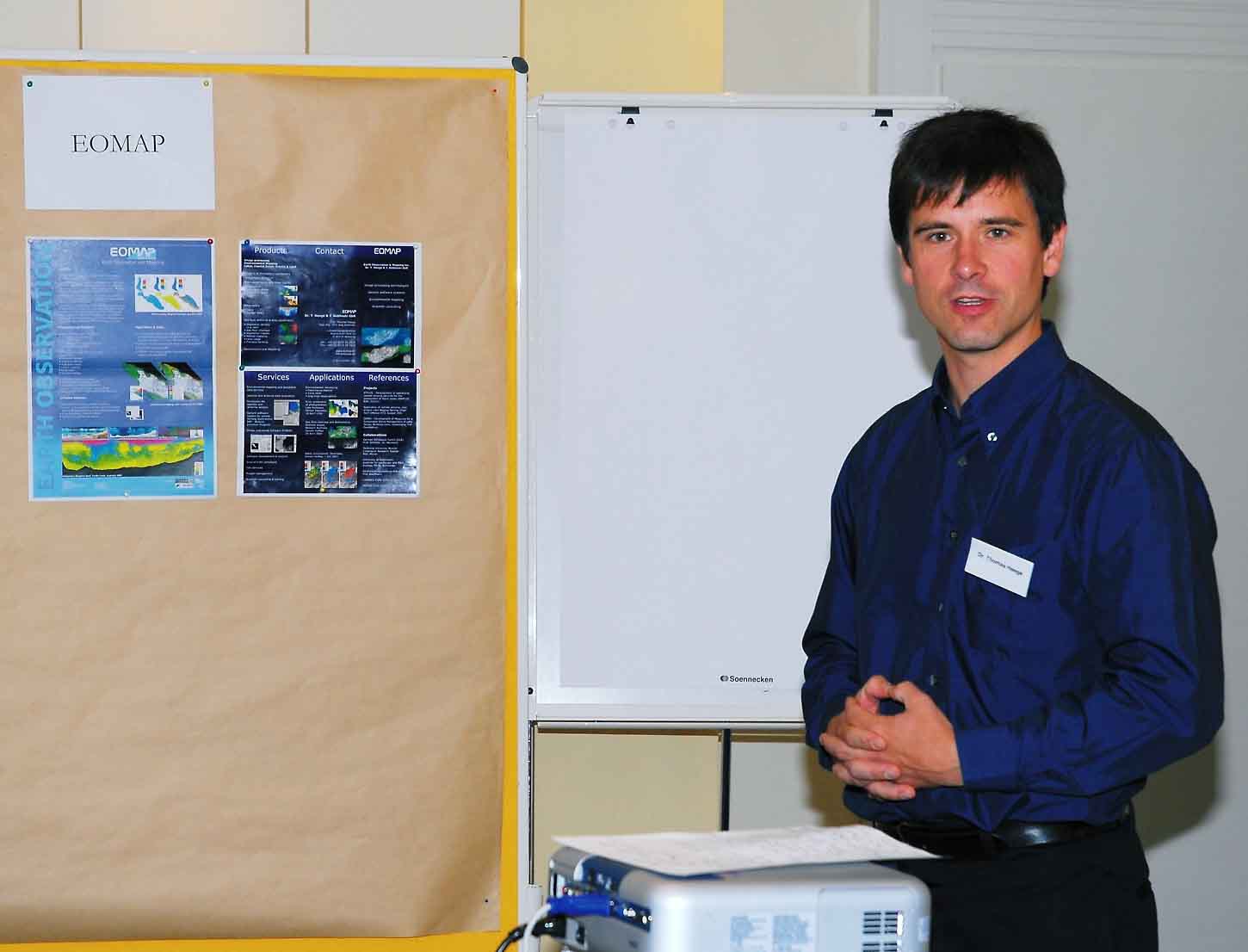
- Check the Dr. Peter Hausknecht’s presentation at the OGP Remote Sensing workshop held at ESA.
Follow along and share your memories as we look back on 20 years EOMAP!
<p>
Latest EOMAP News

Reuters bases Mekong article on EOMAP data
The Development of EOMAP’s Water Quality Platform

UNESCO Water Quality Portal launched

Launching the world’s first comprehensive global water quality atlas with UNESCO

Oman Oil Spill: SDB Mapping of Critical Shallow Waters for Safe Salvage

eoapp DIVE unterstützt die Tauchplanung
Related Posts
09 / 2026
The Development of EOMAP’s Water Quality Platform
09 / 2026
UNESCO Water Quality Portal launched

08 / 2026
Launching the world’s first comprehensive global water quality atlas with UNESCO
08 / 2026
eoapp DIVE unterstützt die Tauchplanung
04 / 2026
Advocating for Healthy Mountain Ecosystems
04 / 2026
Environmental monitoring for sporting events
04 / 2026
20 Years EOMAP: Advancing Earth Observation

03 / 2026
New BD & Sales Manager for the Americas
03 / 2026
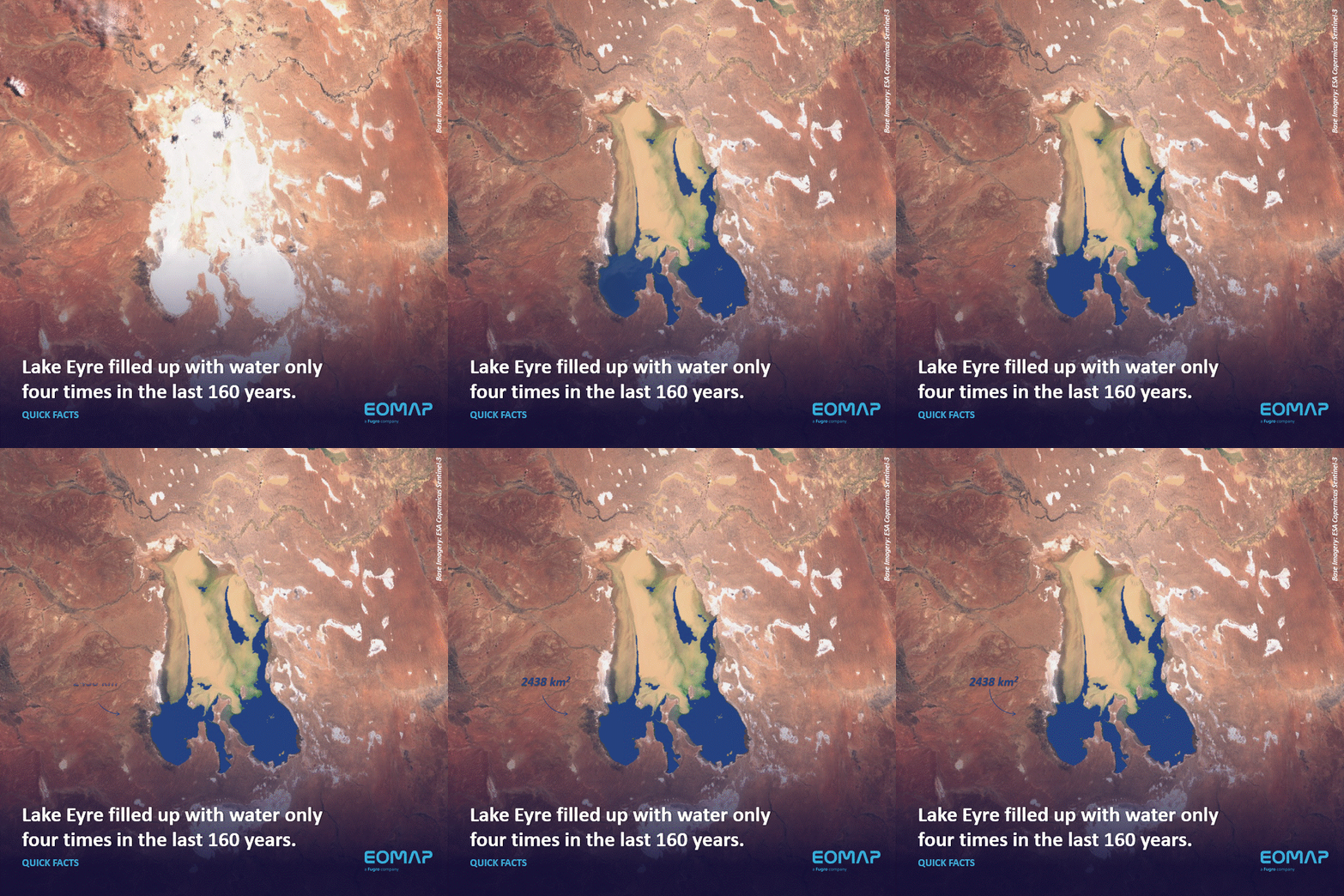
Quick Facts: Lake Eyre
02 / 2026